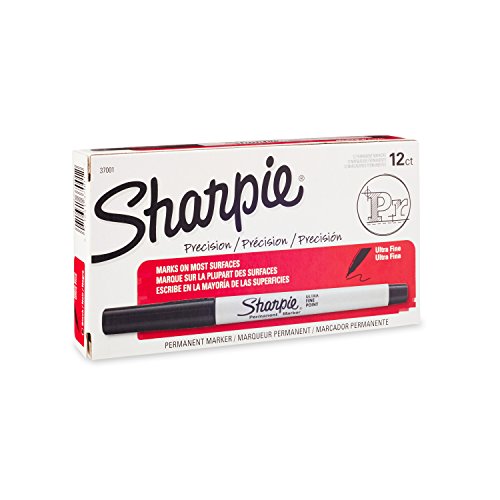
Sharpie Ultra-fine Point Permanent Marker Black
Usually $13.00
Price checked 50m ago
Writing on small surfaces without the ink bleeding into a messy blob is the primary reason to keep these on your desk.
Verified by Agora · Product prices and availability are accurate as of the date/time indicated and are subject to change. Any price and availability information displayed on Amazon at the time of purchase will apply to the purchase of this product. As an Amazon Associate, Agora earns from qualifying purchases.Price checked 50m ago
Near 90-Day Low
What we've verified about this price
Our read on this product
Most permanent markers are designed to fill space, but these are built to navigate it. When you need to label a small container or write a note on a glossy surface where a standard tip would bleed or blur, the ultra-fine point keeps your handwriting legible. It is the difference between a messy scribble and a clean, readable mark.
You will likely find yourself reaching for these more often than you expect, especially for tasks outside of standard labeling. Because the ink dries almost instantly and stays put, they are surprisingly effective for detailing or adding small signatures to items that would usually smudge under a thicker pen. They turn a chore into a quick, predictable task.
What makes it stand out
- The 0.2mm tip provides significantly more control for fine lettering than the standard fine-point markers found in most office packs.
- The ink formulation adheres better to non-porous surfaces like glass or glossy plastic without beading up.
When this isn't the right fit
- You need a marker for broad strokes, coloring, or filling in large areas.
- You are looking for a brush-like tip for calligraphy or varied line weights.
Real-world notes
- The ink dries fast enough that left-handed users rarely deal with smearing.
- The tip is firm and does not fray easily, even after repeated use on slightly textured surfaces.
- The marks stay vibrant on plastic and metal long after application.
Pick these up if you regularly deal with small-scale labeling where clarity is more important than bold coverage.