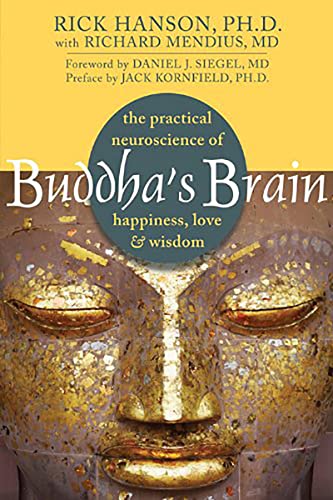
Buddha's Brain The Neuroscience of Happiness
Usually $12.28
Price checked today at 03:10 CT
Understanding the biology behind your moods makes it much easier to stop being a passenger to your own thoughts.
Verified by Agora · Product prices and availability are accurate as of the date/time indicated and are subject to change. Any price and availability information displayed on Amazon at the time of purchase will apply to the purchase of this product. As an Amazon Associate, Agora earns from qualifying purchases.Price checked today at 03:10 CT
What we've verified about this price
Our read on this product
Most self-help books lean heavily into either abstract philosophy or rigid, repetitive exercises. This one sits in the middle, offering a neurological explanation for why your brain defaults to stress and how specific, intentional mental shifts can physically rewire those pathways. It turns the concept of mindfulness from a vague goal into a biological project you can actually track.
You will get the most out of this if you treat it like a manual rather than a narrative. The chapters are dense with scientific context, but the value lies in the guided practices that follow. It is designed for someone who wants to understand the mechanism behind their own emotional regulation so they can stop reacting to negative patterns and start consciously shaping their own mental state.
What makes it stand out
- Provides a specific neurological framework for mindfulness, moving beyond the anecdotal advice found in many general self-help titles.
- Balances academic rigor with actionable, daily exercises, avoiding the trap of being either too dense or too simplistic.
When this isn't the right fit
- You are looking for a quick, passive read to flip through in one sitting.
- You prefer purely spiritual or philosophical texts that avoid clinical or scientific terminology.
- You are not interested in performing the suggested meditation exercises to see results.
Real-world notes
- The exercises require consistent, active effort to see a shift in habitual thought patterns.
- The intersection of ancient wisdom and modern neuroscience makes the advice feel grounded and less like abstract advice.
Pick this up if you want a technical roadmap for your mental health that relies on brain science rather than just positive thinking.